The SimFly mission. A pilot's life

Marco Alvarez: White Silence

Chapter 1 — Preflight

The cold bit at Marco Alvarez’s fingers, even through the gloves.
He cursed under his breath as he zipped up the flight suit and pulled the hood tighter around his ears. It was 06:47 local time at Teniente Rodolfo Marsh Martin Base, and the Antarctic sky was still an iron-gray bruise.

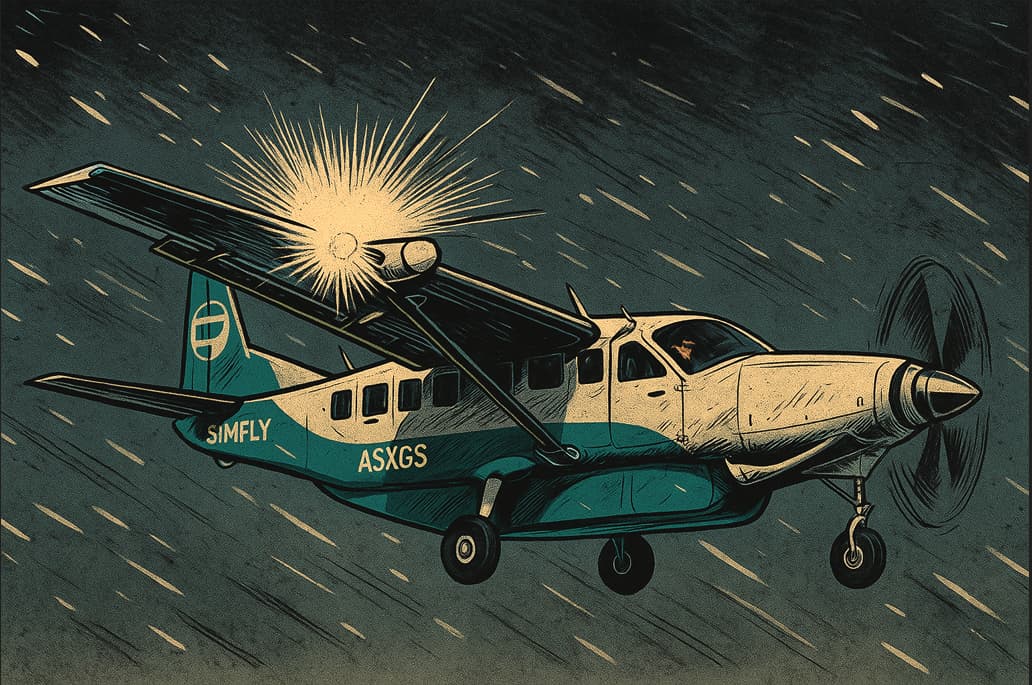
He crossed the snow-dusted tarmac to his Cessna 208B Grand Caravan, parked just beside the wind shelter. The plane looked small and solitary in the endless white, its engine cowling frostbitten, but faithful. Just like him.

Inside the mission office, the base’s senior meteorologist, a Chilean lieutenant named Ramírez, looked up from his screen.

“Visibility’s holding,” Ramírez said, sipping from a chipped mug. “Low winds. Not much shear. You’ve got a clean window until 14:00. Then it drops off hard.”

Marco nodded. “Time to Marambio?”

“One hour, twenty. If you don’t dawdle.”

He didn’t plan to.

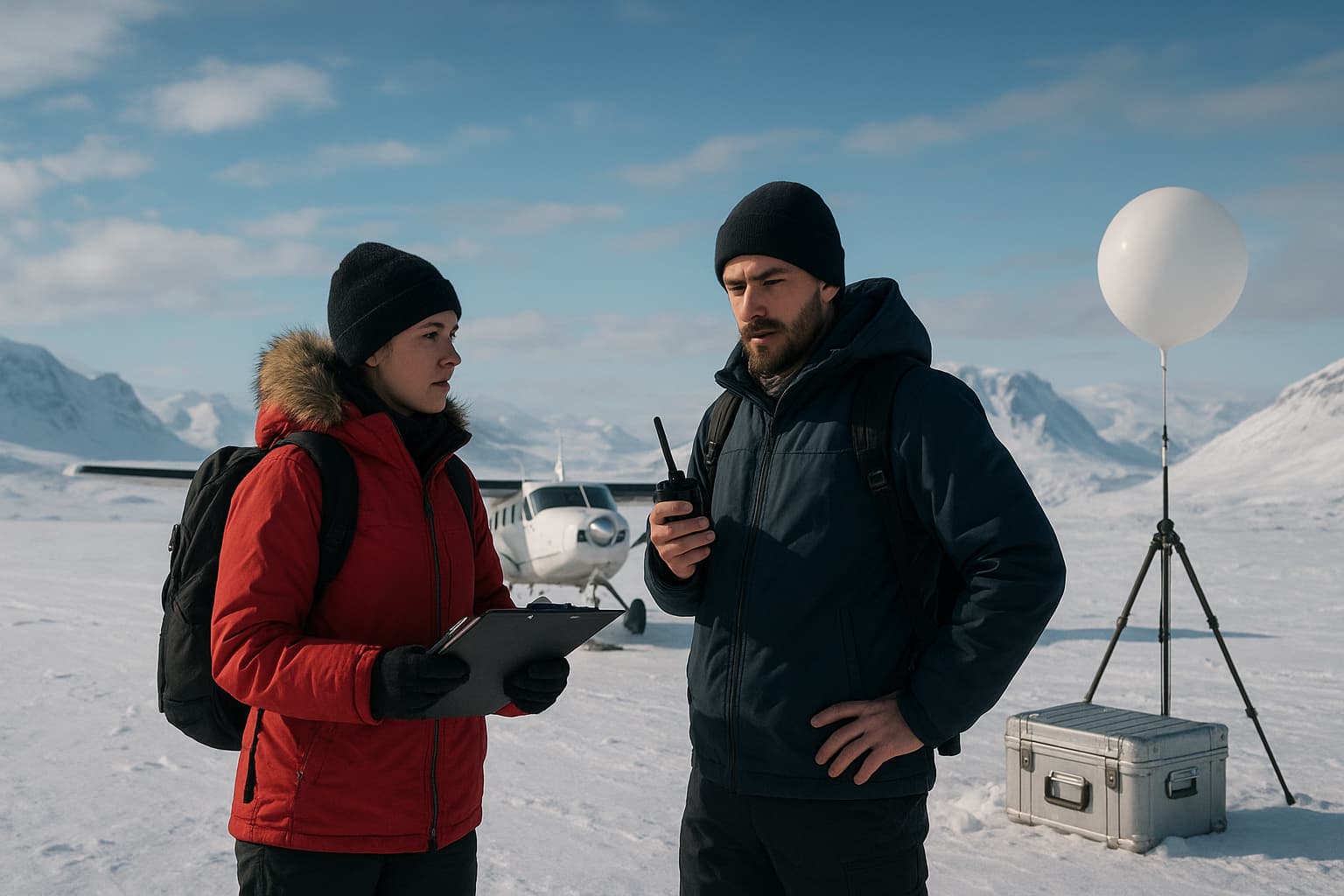
Marco walked back out to the hangar, where two silhouettes waited by the cargo sled: Dr. Javier Ortega, a glaciologist with a dry wit and perpetually fogged-up glasses, and Dr. Lena Moretti, a volcanologist with a sharp tongue and a sharper sense of direction.

“Hope you fly better than you talk,” she said as he approached.

“I hope your equipment doesn’t weigh more than your ego,” Marco replied.

Their crates were already labeled: seismographs, gas sensors, ice core storage, and something heavier Marco wasn’t allowed to ask about.

The flight plan had already been filed an hour ago with SCRM Operations, and confirmation had come through from Marambio (SAWB). Fuel tanks topped. Emergency beacons double-checked. And inside his cockpit bag, tucked between the maps and satellite phone, sat the .40-caliber pistol he never logged on the manifest.

Just in case.

To be continued…

(if you like..:blush:)

2 Likes

Chapter 2 — In Transit

The Cessna 208 lifted off just after 08:15 local time, its single turboprop engine humming like a wasp in a snowstorm. The runway at Teniente Marsh faded behind them as they climbed over the ice shelf, climbing steadily to cruising altitude.

Inside, Lena was already reviewing sensor calibration settings on a tablet, while Javier stared out the window, notebook on his lap, lost in thought.

Marco scanned the horizon, then glanced at the instrument panel.

Altitude: 9,200 feet.
Groundspeed: 160 knots.
Wind: 15 knots out of the southwest.

He reached for the radio.

“SCRM Tower, this is Charlie-Echo-208, en route to SAWB, leveled at niner-thousand. Estimated time of arrival, zero-nine-thirty-five Zulu.”

A crackle.

“Copy that, CE208. Weather remains clear. You’re green all the way. Keep us posted.”
“Will do. CE208 out.”

The view below was endless white. Ice cliffs. Frozen valleys. Shapes that felt alien. Marco had flown across South America, through the Andes, jungles, deserts — but nothing had ever made him feel so small as Antarctica did. It was the kind of silence that didn’t forgive mistakes.

Behind him, Lena spoke up.

“We’ll be installing three long-term monitoring stations. One west of Marambio, near the ice dome. Two closer to the coast, where the melting’s accelerating.”
“Melting that shouldn’t be happening yet,” Javier added. “Not at this rate.”

Marco didn’t answer. He just watched the cloud layer forming ahead — high, thin, and fast-moving.

“Cold front’s coming sooner than forecast,” he muttered.

Lena looked up. “Can we still make it?”

He nodded, adjusting trim. “If nothing changes in the next thirty minutes, we’ll touch down before it closes.”

Chapter 3 — Marambio Base

At 09:39 Zulu, the Cessna’s skis kissed the compacted snow runway of Base Marambio — a lonely Argentine outpost built atop a rocky ridge, surrounded by cliffs of ice and crevasses deep enough to swallow a tank.

The winds were stiffer than forecast. Marco fought the crosswind as he taxied toward the makeshift hangar, where a skeleton crew of engineers in bright orange parkas waited.

One gave a thumbs-up.
Another approached the cockpit with a clipboard.

“Bienvenidos. You’re right on time.”

Marco killed the engine. The silence afterward felt heavier than the hum.

Inside the base’s main dome, warmth and stale coffee filled the air. A technician ran a checklist while Lena and Javier began unpacking equipment.

A younger soldier — no older than 20 — eyed their crates nervously.

“What’s in there?” he asked Marco.

Marco just shrugged. “Science.”


Later that day

By early afternoon, the researchers had already deployed the first station, drilling into the ice to plant deep sensors. Solar panels were raised. Data was already flowing.

But something was wrong.

Javier stared at his readings. Lena leaned in.

“This… can’t be right.”

“Is it equipment drift?” Marco asked, sipping coffee, half-distracted.

“No. The temperature spikes are real. And the CO₂ readings… they’re double what we expected at this elevation.”

They looked at each other.

Then Javier added quietly:

“Either something down there is venting through the ice… or something’s woken up.”

Marco frowned, stepping closer to the edge of the ridge, looking out at the endless ice.

The silence wasn’t peaceful anymore.

It felt… watched.