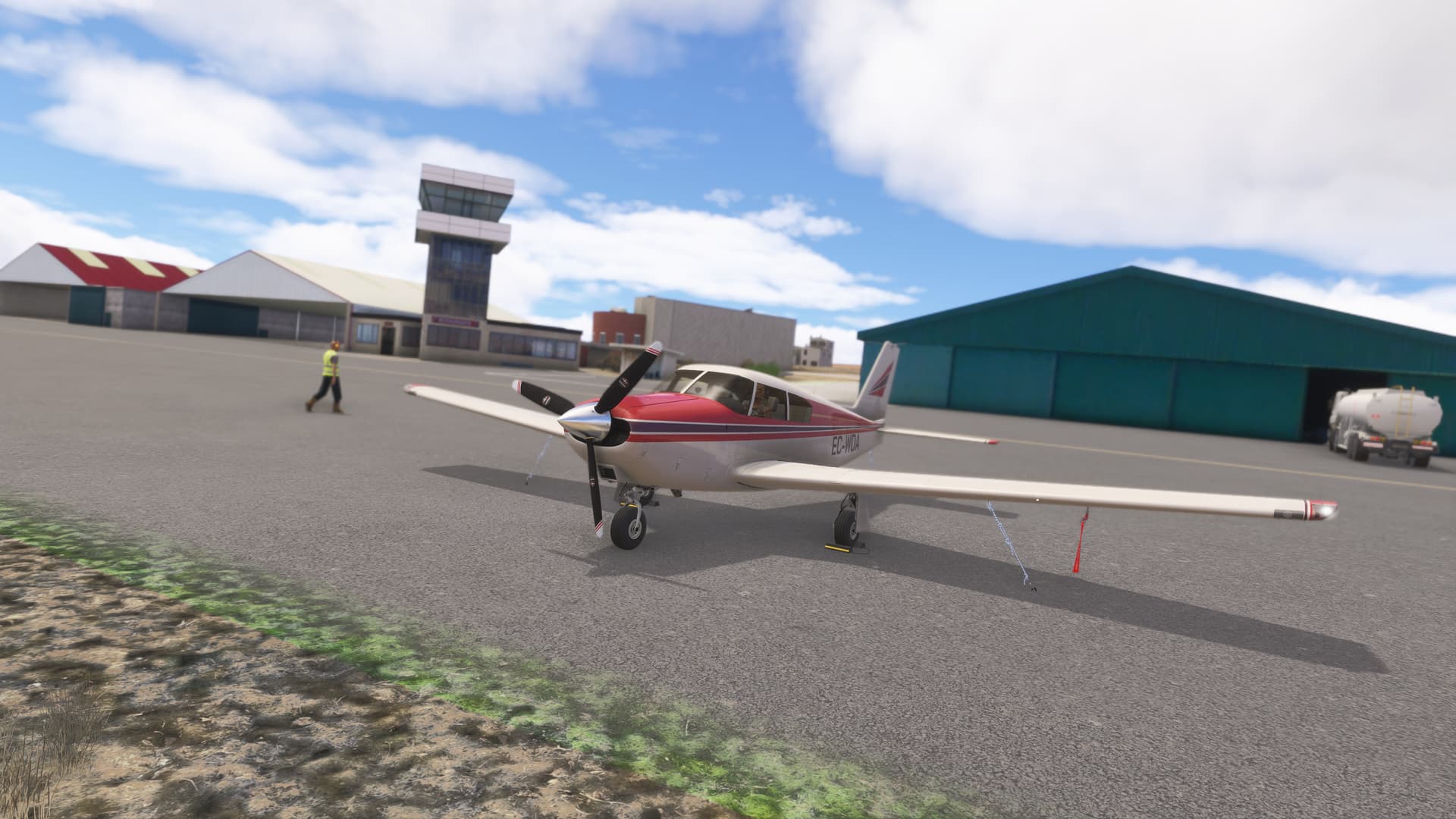
Airport Information Board

LERE – Requena Airfield, Valencia, Spain
ICAO: LERE
IATA:
SimFly Category: 2
Pilot Payout: 60%
Location: Requena, Valencian Community
Runway(s): 12/30 – 3,937 ft × 59 ft (1,200 m × 18 m), Asphalt
Elevation: 2,454 ft (748 m) MSL
VFR Chart: ENAIRE | LERE
MSFS Scenary MSFS Scenary
XPlane Scenary XP11/12 Scenary

Introduction

A small airfield located near the renowned Ricardo Tormo Circuit, home to the final stop of the MotoGP World Championship. LERE (Requena Airfield) is not only strategically positioned for motorsport enthusiasts but also serves as a vital base for firefighting aircraft during the summer, thanks to its proximity to several key reservoirs and the Cofrentes nuclear power plant.

Surrounded by a landscape of striking contrasts, pilots can enjoy breathtaking views from the air: to the west, the expansive Buseo, Benagéber, and Contreras reservoirs offer shimmering waters framed by lush pine forests and rugged terrain — an ideal route for scenic flights or aerial photography. To the south, the Cofrentes nuclear power station stands as a modern engineering landmark nestled in the volcanic region of Ayora-Cofrentes, where thermal activity and natural formations give the area a unique geological character.

This combination of natural beauty, technical interest, and nearby touristic attractions — including wineries, mountain villages, and hiking trails — makes Requena airfield an excellent destination for general aviation pilots seeking more than just a place to land. Whether you’re coming for the circuit, the landscape, or a weekend getaway in inland Valencia, LERE welcomes you with open skies and unforgettable views.
3 Likes

LEMU – Muchamiel Airfield, Alicante, Spain
ICAO: LEMU
IATA:
SimFly Category: 3
Pilot Payout: 60%
Location: Mutxamel (Muchamiel), Valencian Community
Runway(s): 12/30 – 2,953 ft × 128 ft (900 m × 39 m), Asphalt
Elevation: 475 ft (145 m) MSL
VFR Chart: https://guiavfr.enaire.es/contenido_GuiaVFR/AD/LE_guiaVFR_LEMU.html
MSFS Scenary: MSFS Scenary
XPlane Scenary: XP11/12 Scenary

Introduction

The main airfield in the province of Alicante, LEMU (Muchamiel Airfield) is a highly active general aviation hub located just a few nautical miles north of Alicante International Airport (LEAL). Its strategic coastal location makes it an ideal stop for VFR flights along the stunning Mediterranean corridor.

Approaching from the east, pilots are treated to spectacular views of the Castillo de Santa Bárbara perched atop Mount Benacantil, overlooking the historic city of Alicante and its vibrant waterfront. The descent offers a sweeping panorama of golden beaches, turquoise waters, and the bustling marina — a preview of the dynamic coastal life awaiting below.

But the appeal of Muchamiel doesn’t end with the sea. To the north and west, the terrain quickly rises into dramatic sierras and rugged landscapes dotted with almond and olive groves, small traditional villages, and vineyards. The nearby Serra Grossa and the mountain of Cabeçó d’Or offer not only scenic beauty but also a backdrop ideal for aerial photography, gliding, and sightseeing flights.

Thanks to its proximity to the city of Alicante, the Costa Blanca, and inland mountain ranges, Muchamiel is a gateway to both sun-soaked beaches and rural charm. Whether you’re planning a coastal flight, a weekend city escape, or a scenic tour of Alicante’s natural wonders, LEMU offers a perfect combination of accessibility, beauty, and Mediterranean hospitality.

3 Likes

LEGY – Aeródromo de Soria–Garray, Soria, Spain
ICAO: LEGY
IATA:
SimFly Category: 2
Pilot Payout: 60%
Location: Garray, Province of Soria, Castile and León
Runway(s):
09/27 – 4,452 ft × 75 ft (1,357 m × 23 m), Asphalt
02/20 – 1,614 ft × 59 ft (492 m × 18 m), Asphalt
Elevation: 3,399 ft (1,036 m) MSL
VFR Chart: ENAIRE | LEGY
MSFS Scenary: MSFS Scenary
XPlane Scenary:

Introduction

Despite being a lower-category airport, Soria-Garray Airfield (LEGY) boasts a generously long runway, capable of handling larger aircraft — including Spanish Air Force C-130 Hercules, which have been spotted performing training landings here. Its quiet airspace, excellent visibility, and well-maintained facilities make it a hidden gem for general aviation pilots seeking both practicality and charm.

Located just minutes from the historic city of Soria, this airfield is nestled in the heart of inland northern Spain, surrounded by the expansive Castilian plateau and rich natural heritage. The surrounding region offers a scenic approach over pine forests, gentle hills, and the Duero River. The nearby Sierra de la Cebollera and the Picos de Urbión provide a stunning mountain backdrop, especially beautiful during winter and spring.

LEGY is also steeped in history — situated next to the archaeological site of Numantia, one of the most iconic Celtiberian cities of ancient Spain. A short flight from the airfield opens access to historical castles, Romanesque churches, and medieval towns such as El Burgo de Osma or Calatañazor, making it an ideal base for aviation tourism.

Whether you’re planning a cross-country flight, a cultural weekend, or simply looking to explore one of Spain’s most peaceful and picturesque regions from above, Soria-Garray offers a unique blend of aviation capability and Castilian charm.

3 Likes

LEMR – La Morgal Airfield, Asturias, Spain
ICAO: LEMR
IATA:
SimFly Category: 2
Pilot Payout: 60%
Location: La Morgal, Oviedo (Asturias), Spain
Runway(s): 10/28 – 3,281 ft × 98 ft (1,000 m × 30 m), Asphalt
Elevation: 541 ft (165 m) MSL
VFR Chart: https://guiavfr.enaire.es/contenido_GuiaVFR/AD/LE_guiaVFR_LEMR.pdf
MSFS Scenary: MSFS Scenary
XPlane Scenary:

Introduction

La Morgal Airfield (LEMR) is one of the most prominent general aviation platforms in northern Spain, located in the heart of Asturias, just minutes from Oviedo and Gijón. Though modest in size, the aerodrome plays a key role in regional aviation, firefighting operations, and air rescue services — all while offering a scenic and accessible base for private pilots.

What truly sets LEMR apart is its proximity to the Fernando Alonso Circuit, a world-class karting track designed by the Formula 1 champion himself. Located right next to the airfield, the complex includes a museum showcasing some of Alonso’s most iconic race cars, trophies, and personal memorabilia — a must-visit for motorsport enthusiasts arriving by air.

The approach to La Morgal offers a breathtaking aerial tour of Asturias: verdant meadows, gently rolling hills, and the dramatic peaks of the Picos de Europa in the distance. The region is known for its natural beauty and strong cultural identity, with traditional villages, cider houses, and Romanesque architecture waiting to be explored.

From the cockpit, the contrast between green valleys and the Atlantic coastline makes every flight in and out of LEMR an unforgettable experience. Whether you’re planning a weekend of aviation and adrenaline at the karting circuit, or looking to explore the rich cultural and gastronomic offerings of Asturias, La Morgal is the perfect starting point

3 Likes

SAWH - Ushuaia/Malvinas Argentinas International Airport, Ushuaia, Tierra del Fuego, Argentina

ICAO: SAWH
SimFly category: 4
Pilot payout: 60%
Location: Southernmost international airport in the world, serving as a gateway to Antarctica and the Falkland Islands. View on Google Maps
Runway: 07/25, 9,199 ft x 148 ft / 2,804 m x 45 m
Elevation: 102 ft / 31 m

Details: SimFly | SAWH
Flightsim.to: Malvinas Argentinas International Airport for MSFS
MSFS payware scenery: simMarket: SAWH USHUAIA MSFS
XPlane gateway scenery: SAWH - Ushuaia Malvinas Argentinas
SkyVector: SAWH - Ushuaia/Malvinas Argentinas Airport
Other Resources: Ushuaia Airport Official Website (en)

Introduction:
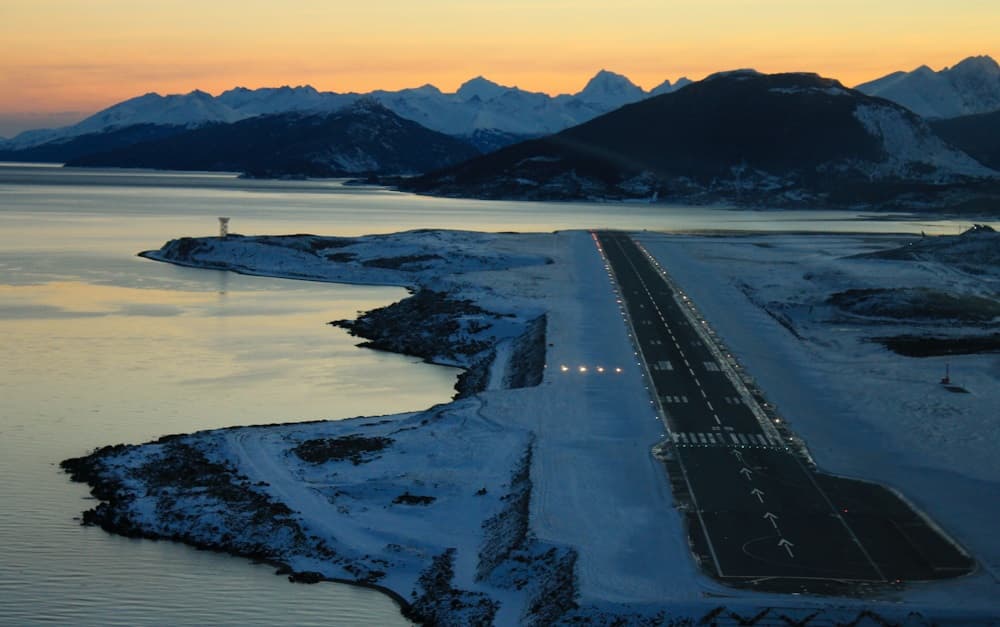
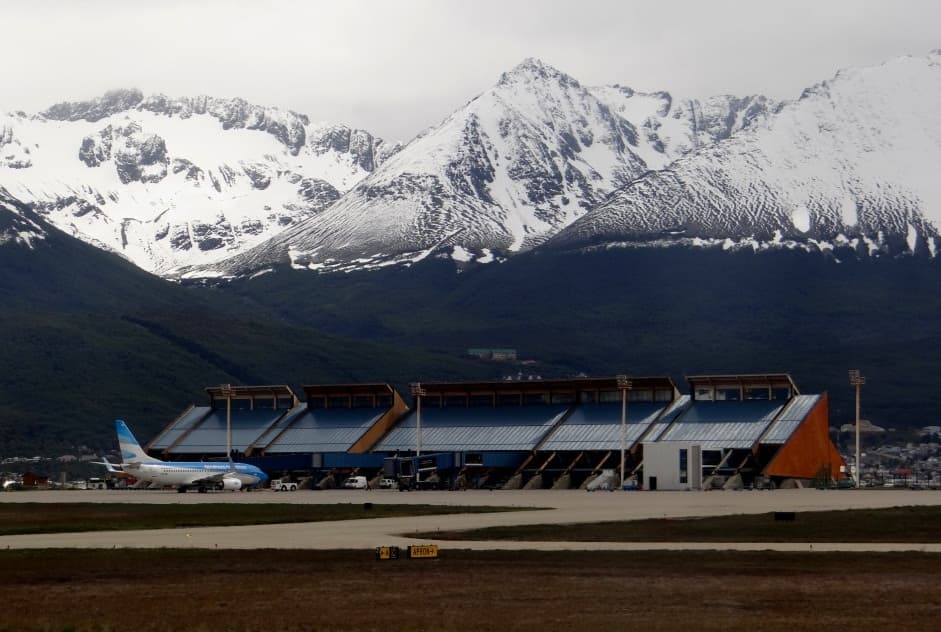
Ushuaia/Malvinas Argentinas International Airport (ICAO: SAWH, IATA: USH) is located approximately 4 km south of Ushuaia, the southernmost city in the world, on the island of Tierra del Fuego, Argentina. This airport serves as a crucial hub for travelers heading to Antarctica and the Falkland Islands. With a single concrete runway measuring 9,199 feet in length, it accommodates various aircraft types, including wide-body jets during peak seasons. The airport’s unique location offers stunning views of the surrounding mountains and the Beagle Channel, making it a favorite among aviation enthusiasts and simulation pilots alike.

Great MSFS scenery is available for SAWH in both free and payware varieties. If you opt for Simulacion Extrema’s excellent payware version, you’ll be greeted with a modeled tower, animated flags and animated radar antenna.

From towering mountains to massive glacier fields and animated whales! Ushuaia is sure to make a lasting impression.


4 Likes

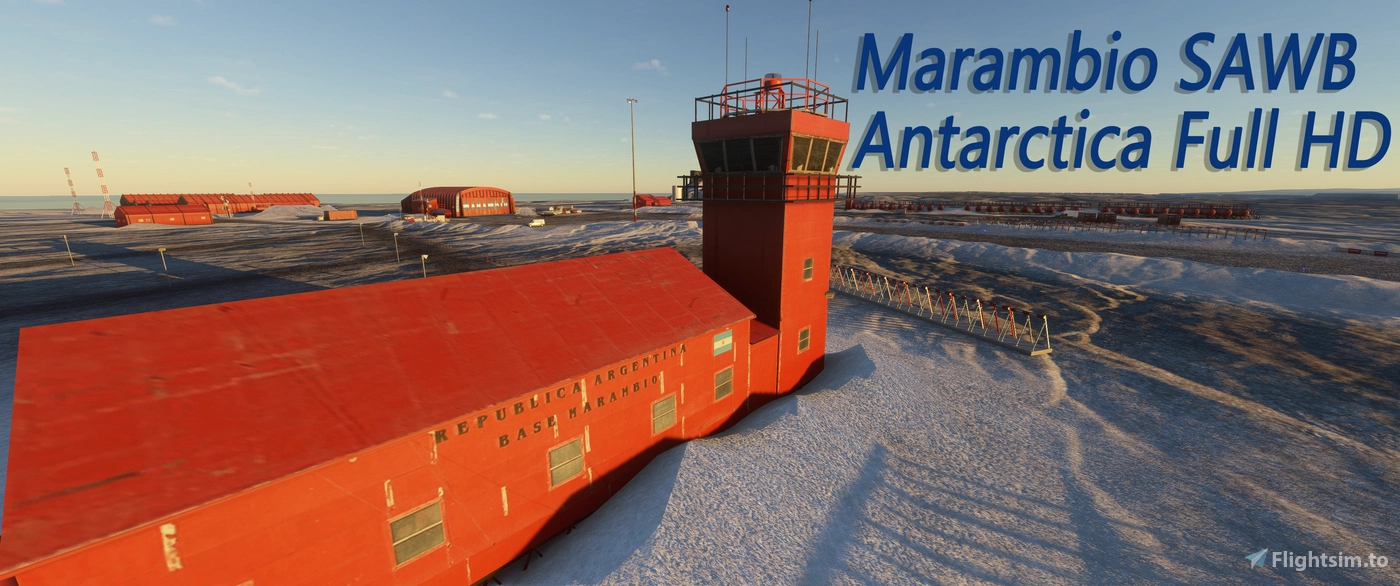
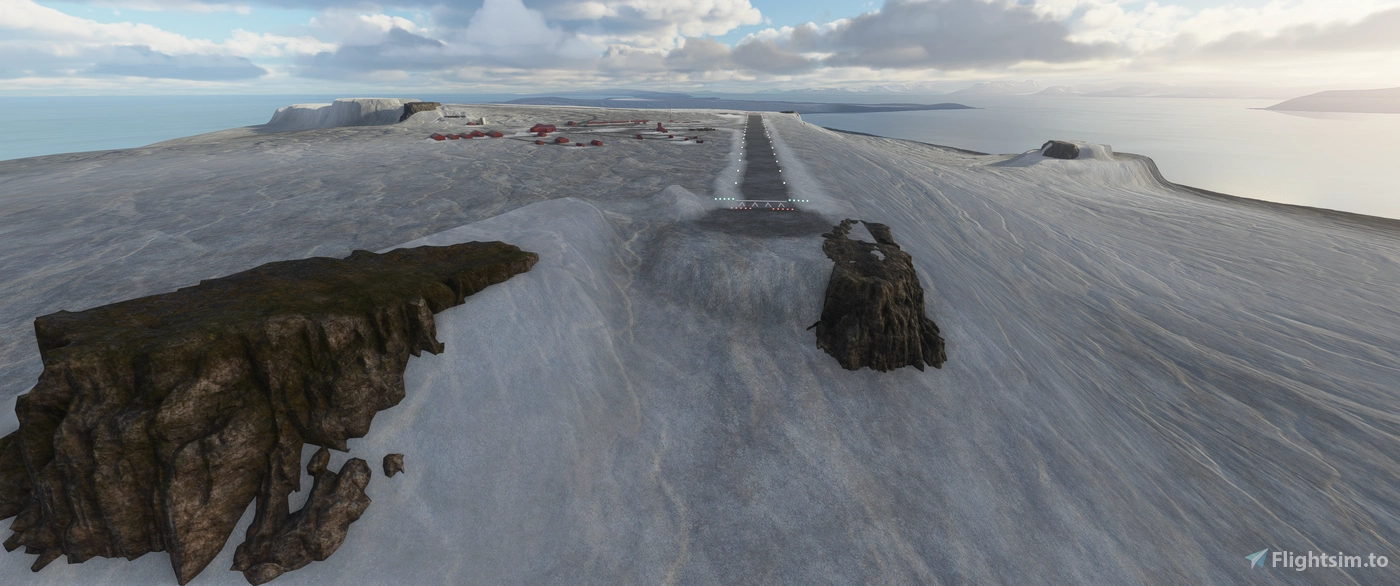
SAWB – Marambio Base, Seymour Island (Antarctica)
ICAO: SAWB
SimFly category: 1 (growing up by level)
Pilot payout: 10% (could change :wink:)
Location: Seymour Island, Antarctic Peninsula – Google Maps
Runway(s): 05/23, 4134 ft X 115 ft / 1260 m X 35 m
01/19, 5249 ft X 131 ft / 1600 m X 40 m
Elevation: 760 ft / 232 m

Its better to download the sceneries.

Flightsim.to: Marambio Base HD Custom Scenery – Antarctica Here

MSFS payware scenery: Colombian Virtual Design – Base Marambio Antarctica Here

XPlane gateway scenery: SAWB at X‑Plane Scenery Gateway
SkyVector: SkyVector airport page and charts
AirNav: AirNav airport info search
Other Resources: AirportGuide overview | Aviaplanner charts | OurAirports data

Marambio Base crowns a windswept plateau above the Weddell Sea and serves as Argentina’s year‑round lifeline to its Antarctic outposts. Two graded‑earth runways—one just over 1600 m—enable wheeled C‑130, KC‑390, and Twin Otter operations even in mid‑winter, supported by edge strobes, a heated apron, and a 12‑m control tower. Expect brutal cross‑winds, white‑outs, and a sea‑ice drop‑off on final; GPS and the on‑field MBI VOR (117.0 MHz) back up tower calls on 118.10 / 118.50 MHz. Custom scenery for MSFS and X‑Plane brings the station’s elevated walkways, snow‑dusted terrain mesh, and fluttering flags to life, making SAWB a favourite proving ground for bush and BRAVE pilots who want Antarctica without skis.


4 Likes

EGPN - Dundee Airport, Dundee, Scotland, United Kingdom

ICAO: EGPN
SimFly category: 2
Pilot payout: 60%
Location: Eastern Scotland, on the northern bank of the Firth of Tay – View on Google Maps

Runway: 09/27, 4602 ft x 148 ft / 1403 m x 45 m
Elevation: 17 ft / 5 m

Details: SimFly | EGPN
Flightsim.to: Freeware Dundee Airport scenery for MSFS
MSFS payware scenery: EGPN Dundee Airport for MSFS 2020 - Orbx
XPlane gateway scenery: EGPN on the X-Plane Scenery Gateway
SkyVector: EGPN airport information
Other Resources: Official site

Introduction:
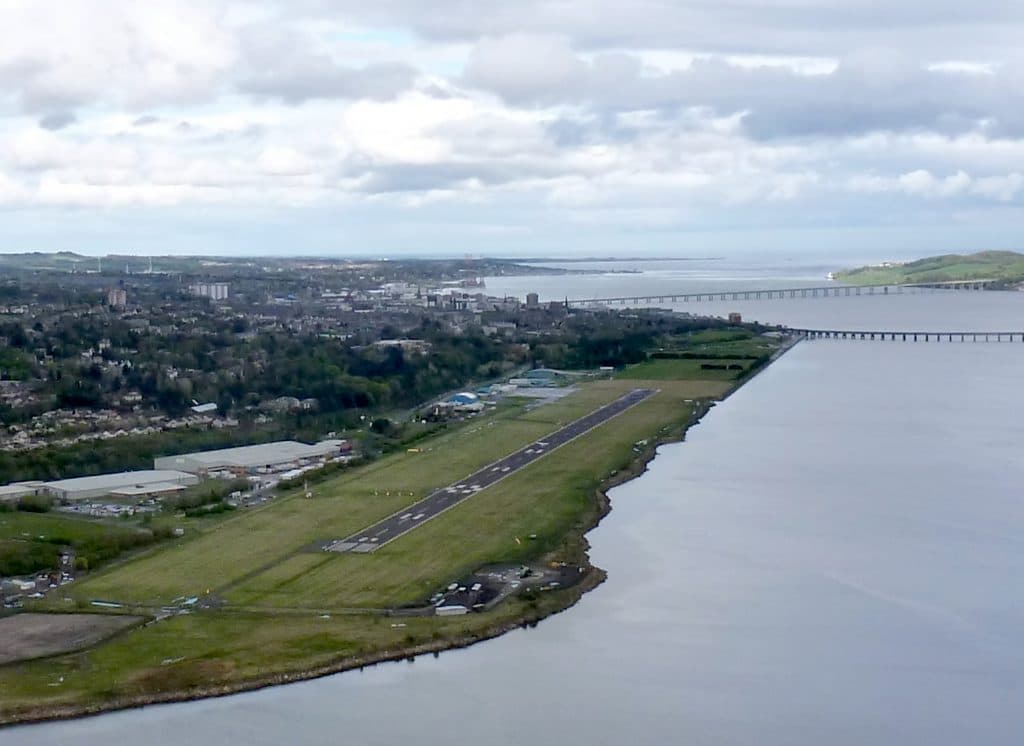
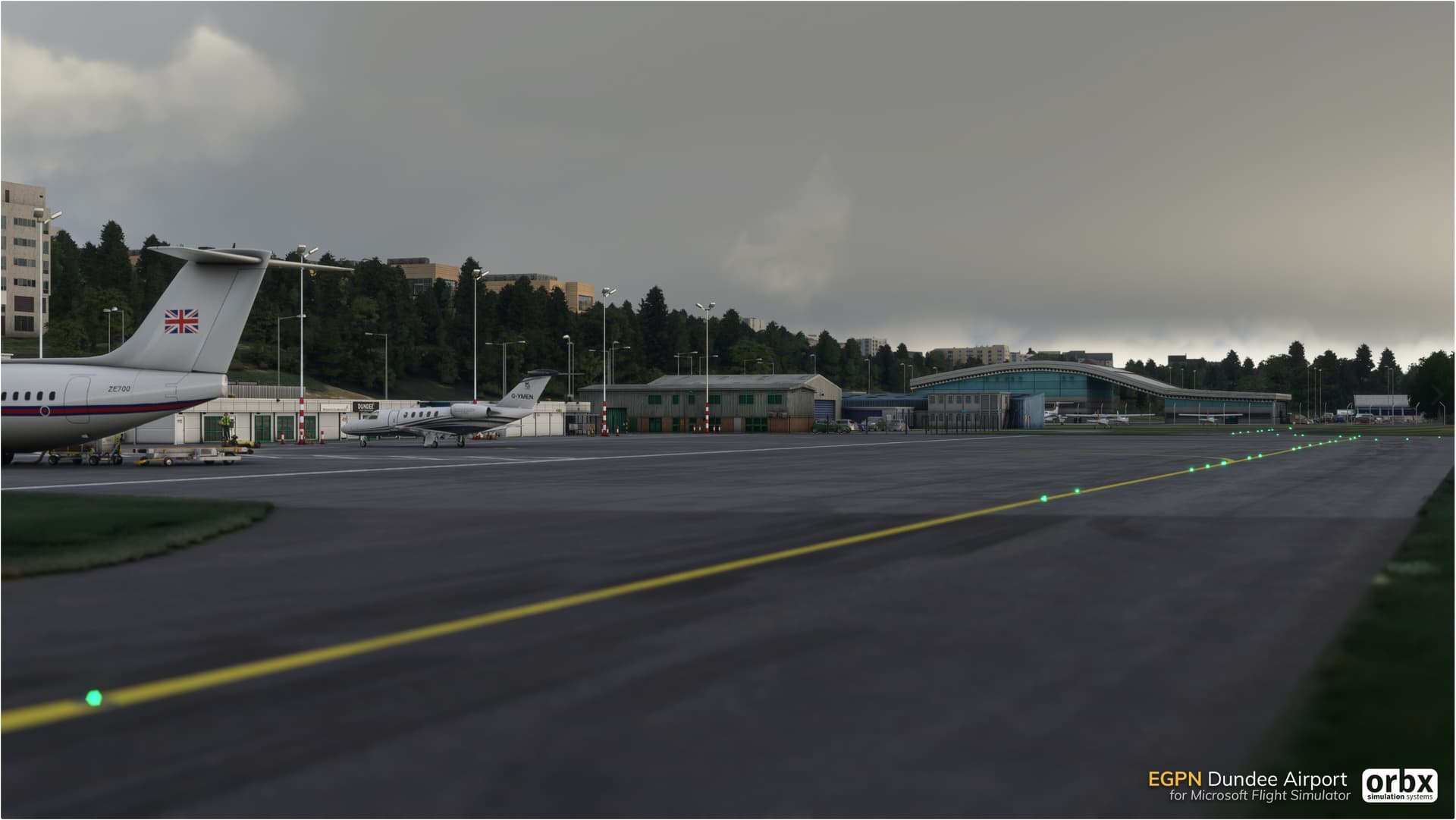
Dundee Airport (pronounced DUN-dee) is a compact regional airport located on Scotland’s eastern coast, just west of the city center of Dundee. It sits on the banks of the River Tay and offers a uniquely scenic approach over water, especially on Runway 09. The airport supports commercial turboprop service, general aviation traffic, and flight training operations. With its short runway and proximity to urban development, it presents a rewarding challenge for simulator pilots practicing precision landings. EGPN is also a convenient hub for virtual pilots exploring Scotland’s east coast, Highlands, and the Orkney or Shetland Isles.

4 Likes

LEFM – Fuentemilanos, Segovia (Spain)
ICAO: LEFM
SimFly category: 2
Pilot payout: 60% :money_with_wings:
Location: Fuentemilanos, Segovia, Castilla y León – Google Maps

Runway(s):
Runway 05/23, 3,937 ft X 98 ft / 1,200 m X 30 m
Elevation: 3,038 ft / 926 m

It’s better to download the sceneries for full immersion.

:small_airplane: Recommended Sceneries:

  • Flightsim.to: Free HD LEFM Scenery (if available)
  • XPlane Gateway: LEFM at the X-Plane Scenery Gateway
  • Other resources: AirportGuide Overview | Aviaplanner Charts | OurAirports Data

Fuentemilanos is a major gliding hub in Spain, perched on the high plains of Castilla. With its 1,200-meter paved runway and elevated terrain, it’s ideal for soaring practice and VFR operations. The rural surroundings, proximity to the Guadarrama mountains, and consistent thermal patterns make LEFM both a challenging and beautiful destination. No lights, no tower—just pure visual flying! Perfect for pilots looking to sharpen their stick-and-rudder skills under realistic, minimalist conditions.

5 Likes

LEBE – Beas de Segura Airfield, Jaén, Spain
ICAO: LEBE
IATA:
SimFly Category: 2
Pilot Payout: 60%
Location: Beas de Segura, Andalusia
Runway(s): 09/27 – 3,937 ft × 66 ft (1,200 m × 20 m), Asphalt
Elevation: 2,152 ft (656 m) MSL
VFR Chart: LEBE VFR Chart
MSFS Scenery: MSFS Scenery (flightsim.to)
XPlane Scenery:

Introduction

Nestled in the province of Jaén, Beas de Segura Airfield (LEBE) offers a scenic and straightforward flying experience in the heart of Andalusia. With a 1,200-meter asphalt runway and minimal infrastructure, it’s a popular choice for general aviation and VFR enthusiasts looking for tranquility and mountainous vistas. The airfield is surrounded by olive groves and rolling terrain, near the natural parks of Sierra de Segura and Cazorla, making it ideal for sightseeing flights. The lack of night lighting or tower operations emphasizes its rural charm and demands solid pilotage skills. A great stop for bush flyers and those looking to explore southern Spain by air.

3 Likes

EGGW - Luton Airport, London/England, United Kingdom

ICAO: EGGW
IATA: LTN
SimFly category: 4
Pilot payout: 60%
Location: Luton - Google: https://maps.app.goo.gl/E9oubWWsi1d4xm5V8
Runway(s): 25/7, 7093 ft X 148 ft / 2162 m X 45 m
Elevation: 515 ft / 157 m

MSFS payware scenery: iniBuilds, iniBuilds Luton (EGGW) for MSFS – iniBuilds Store
SkyVector: EGGW - London Luton Airport | SkyVector

Introduction:
London Luton Airport is an international airport located in Luton, England, situated 1.7 miles (2.7 km) east of the town centre, and is the fourth-busiest airport serving London. The airport is owned by London Luton Airport Limited, a company wholly owned by Luton Borough Council, and operated by London Luton Airport Operations Limited (LLAOL).

An airport was opened on the site on 16 July 1938. During the Second World War, the airport was used by fighters of the Royal Air Force. Commercial activity and general aviation flight training at Luton resumed during 1952. By the 1960s, Luton Airport was playing a key role in the development of the package holiday business; by 1969, a fifth of all holiday flights from the UK departed from Luton Airport. From the mid-1960s, executive aircraft have been based at the airport. During the late 1970s, an expansion plan was initiated at Luton to accommodate as many as 5 million passengers per year, although the airport experienced a reduction in passenger numbers in the 1980s. In 1990, the airport was renamed London Luton Airport to try and emphasise the airport’s proximity to the capital.

2 Likes

LICA - Lamezia Terme International Airport, Lamezia terme/Calabria, Italy

ICAO: LICA
IATA: SUF
SimFly category: 4
Pilot payout: 60%
Location: Lamezia Terme - Google: https://maps.app.goo.gl/tghxHvvaKWfDbfQK9
Runway(s): 28/10, 9892 ft X 148 ft / 3015 m X 45 m
Elevation: 46 ft / 14 m

MSFS payware scenery: Orbx, LICA Lamezia Terme International Airport - Microsoft Flight Simulator - Orbx
SkyVector: LICA - Lamezia Terme Airport | SkyVector

Introduction:
Lamezia Terme International Airport (Italian: Aeroporto Internazionale di Lamezia Terme “Sant’Eufemia”) (IATA: SUF, ICAO: LICA) is an airport in the Sant’Eufemia district of Lamezia Terme, Calabria, Italy. It is the principal airport of Calabria. Additionally, a military helicopter unit, the 2° Reggimento dell’Aria “Sirio”, is based near the airport.

1 Like

EFRO - Rovaniemi Airport, Rovaniemi/Finnish, Finnish

ICAO: EFRO
IATA: RVN
SimFly category: 4
Pilot payout: 60%
Location: Rovaniemi - Google: https://maps.app.goo.gl/H7f2w1LzqvFerebt5
Runway(s): 21/03, 9849 ft X 197ft / 3002 m X 60 m
Elevation: 634 ft / 193 m

MSFS payware scenery: Orbx, EFRO Rovaniemi Airport - Orbx
SkyVector: EFRO - Rovaniemi Airport | SkyVector

Introduction:
Rovaniemi Airport (Finnish: Rovaniemen lentoasema) (IATA: RVN, ICAO: EFRO) is the second busiest airport in Finland after Helsinki-Vantaa, as measured by the numbers of passengers and landings. It is located in Rovaniemi, Finland, about 10 kilometres (6 mi) north of Rovaniemi city centre. The Arctic Circle crosses the runway close to its northern end.
Rovaniemi Airport is one of three airports in Finland that have jet bridges (the other two are Helsinki-Vantaa Airport and Oulu Airport). The airport is managed by Finavia. It is connected to Rovaniemi city centre by an airport taxi, and there are also multiple bus connections around Lapland, including to major winter sports centers.

Rovaniemi Airport is the second-busiest airport in Finland after Helsinki airport. Santa Claus Village and Santa Park are within 2–3 kilometres (1.2–1.9 mi). The airport is about 8–9 kilometres (5.0–5.6 mi) away from Rovaniemi city centre, so that many restaurants and hotels are nearby. The busiest time for the airport is in the Christmas season, when many people go on Santa Flights. In April 2025, Finavia announced plans to expand the airport by approximately €3 million because of the constantly growing tourism to Lapland.

In addition to civil traffic, the runway is also used by F-18 fighter interceptors of Lapin lennosto (Lapland Air Command). The Rovaniemen vartiolentue (air unit of the Frontier guard of Lapland) is also located nearby.

1 Like

LIRQ - Florence Airport, Florence/Tuscany, Italy

ICAO: LIRQ
IATA: FLR
SimFly category: 4
Pilot payout: 60%
Location: Florence - Google: https://maps.app.goo.gl/5ygypwrVxnJcex6J9
Runway(s): 23/05, 5118 ft X 148 ft / 1560 m X 45 m
Elevation: 122 ft / 37 m

MSFS payware scenery: Orbx, LIRQ Florence Airport - Microsoft Flight Simulator - Orbx
SkyVector: LIRQ - Firenze/Peretola Airport | SkyVector

Introduction:
Florence Airport, Peretola (IATA: FLR, ICAO: LIRQ), in Italian Aeroporto di Firenze-Peretola, formally Amerigo Vespucci Airport, is the international airport of Florence, the capital of the Italian region of Tuscany. It is the second-busiest Tuscan airport in terms of passengers after Pisa International Airport.

The first air field in Florence was created in the Campo di Marte area in 1910, when military authorities allowed a field to be used for “experiments in air navigation”. Campo di Marte thus became Florence’s first airport, and remained so throughout the 1920s. However, the field was soon surrounded by houses and was inadequate for the new aircraft that were then replacing the first canvas-covered craft. In 1928, a location on the plain between Florence and Sesto Fiorentino was chosen. Peretola Airport opened there on 4 June 1931.

At first, Peretola was a large field where airplanes took off and landed with no formal direction, but eventually, the Ministry of Aeronautics decided to enlarge and upgrade it. The airport was extended toward Castello, and in 1938–39, an asphalt runway 60 metres (200 ft) wide and 1,000 metres (3,300 ft) long, facing northeast, was built.

During World War II, Peretola was used both by the Royal Italian Air Force and the Luftwaffe and from 1944 by Allied air forces. Then later in the 1940s it welcomed its first passenger flights, operated by Aerea Teseo with Douglas DC-3 aircraft.[4] In 1948, Aerea Teseo went out of business. In the late '50s and early '60s, Alitalia, also using the DC-3, offered two routes: Rome–Florence–Venice and Rome–Florence–Milan. ATI then offered several domestic flights with the Fokker F27.

In the early 1980s, plans were made to upgrade the airport’s facilities. In 1984, Saf (now AdF, the company that manages the airport) was founded, and restructuring work was completed: lengthening (to 1,400 m (4,600 ft)) and lighting the runway, installing a VOR/DME navigation system, and rebuilding the airport terminal. In September 1986, regular flights resumed. Since then, the number of airplanes and passengers has steadily increased.

2 Likes

EGNM - Leeds Bradford Airport, Leeds/England, United Kingdom

ICAO: EGNM
IATA: LBA
SimFly category: 4
Pilot payout: 60%
Location: Leeds - Google: https://maps.app.goo.gl/8hrjrEKWYFrnZQvR7
Runway(s): 32/14, 7382 ft X 151 ft / 2250 m X 46 m
Elevation: 674 ft / 205 m

MSFS payware scenery: Orbx, EGNM Leeds Bradford Airport V2 - Microsoft Flight Simulator - Orbx
SkyVector: EGNM - Leeds Bradford Airport | SkyVector

Introduction:
Leeds Bradford Airport (IATA: LBA, ICAO: EGNM) is located in Yeadon, in the City of Leeds Metropolitan District in West Yorkshire, England, about 7 miles (11 km) northwest of Leeds city centre, and about 9 miles (14 km) northeast from Bradford city centre. It serves Leeds and Bradford and the wider Yorkshire region including York, Wakefield and Harrogate, and is the largest airport in Yorkshire. The airport was in public ownership until May 2007, when it was bought by Bridgepoint Capital for £145.5 million. Bridgepoint sold it in 2017 to AMP Capital.

Leeds Bradford opened on 17 October 1931 when it was known as Leeds and Bradford Municipal Aerodrome or Yeadon Aerodrome; some locals still refer to it as Yeadon Airport. Largely used for general aviation and training purposes early on, the first scheduled flights commenced on 8 April 1935. To accommodate passenger traffic, work commenced on the first terminal in the late 1930s, although only the first wing was completed before the Second World War.

British aircraft manufacturer Avro constructed a shadow factory called the Leeds Bradford Airport Depot to the north of the airport, which was the largest free-standing structure in Europe at that time. Avro produced around 5,515 aircraft before it closed in December 1946 and civil flights recommenced the following year. It is located where Leeds Bradford Airport Industrial Estate is today.

In 1965, a new runway opened. After Yeadon’s terminal was destroyed in a fire, a replacement was completed in 1968. In the early 1980s, runway extensions were completed that enabled it to be classified as a regional airport. On 4 November 1984, the day a runway extension was opened, Wardair commenced transatlantic flights to Toronto, using Boeing 747s. On 2 August 1986, an Air France Concorde charter flight from Paris landed for the first time, drawing an estimated crowd of 70,000 people. More Concorde charter flights took place until 2000. In 1994, the airport’s operational hour restrictions were removed, enabling flights at any time of day. Since 1996, the terminal has been expanded in the terms of size and facilities. In 2007, nearly 2.9 million passengers passed through the airport, an 88% increase in seven years and more than twice as many compared with 1997 (1.2 million).

Leeds Bradford has a CAA Public Use Aerodrome Licence (Number P800) that allows flights for passenger transport and flight training. The airport operates scheduled flights to many European destinations and a limited number of domestic destinations. It is the highest airport in England at an elevation of 681 ft (208 m). By the number of passengers handled in 2024, Leeds Bradford was the 13th busiest airport in the UK. It is a base for Jet2.com, which has its headquarters at the airport.

1 Like

LICB - Comiso Airport, Comiso/Sicily, Italy

ICAO: LICB
IATA: CIY
SimFly category: 4
Pilot payout: 60%
Location: Comiso - Google: https://maps.app.goo.gl/iFukvyW8Nfk4B5mc9
Runway(s): 23/05, 8327 ft X 148 ft / 2538 m X 45 m
Elevation: 756 ft / 230 m

Flightsim.to : https://it.flightsim.to/file/5956/licb-aeroporto-di-comiso-magliocco
SkyVector: LICB - Comiso Airport | SkyVector

Introduction:
Comiso Airport “Pio La Torre” (IATA: CIY, ICAO: LICB), also known as Vincenzo Magliocco Airport, is an airport located in the town of Comiso in the Province of Ragusa, Sicily, Italy. The airport serves Comiso (5 km [3.1 mi]), Ragusa (15 km [9.3 mi]), Vittoria and Gela. It changed from military to civil use during 2005–2008. The airport was opened to commercial and general aviation 30 May 2013.
The installation began as an aerodrome that was constructed in southeastern Sicily, at the foot of the Hyblaean Mountains (“Monti iblei”) and near the city of Comiso. The airport was designed in 1934 under the fascist regime but building works did not start until 1935 and were finished in 1939. Magliocco Aerodromo was dedicated in 1936 and named in honor of Major General Vincenzo Magliocco, the first Sicilian to become a general officer in the Italian Air Force. Magliocco had been killed in the Ethiopian war in 1936.

It became one of several key aerodromes in southern Sicily during the Second World War. German forces were stationed there in 1941, as part of Italy’s Axis Alliance, and the German Luftwaffe in 1943 conducted air operations against Allied positions in Maghreb and Malta after its withdrawal from Tunisia.

Aerial bombardments by the Allies rendered the airfield unserviceable on 26 May and 17 June 1943 in preparation for Operation Husky, the allied landings on Sicily. Just after the landing on the nearby Sicilian beaches two Ju 87 Stuka dive bombers took off from Comiso to bomb the landing beaches, only to be met by United States Army troops at the airfield when they landed for rearming and fuel. Ground assault forces of the II Corps, under the command of (then) Lieutenant General Omar Bradley, captured the base on 11 July 1943. Six days later, after quick repairs to the airfield, Allied air forces began operations at Magliocco, designated Comiso Airfield by the Allies, coming under the USAAF Twelfth Air Force. It was primarily used to support airborne and assault glider operations.

1 Like

LECN – Castellón Airfield, Castellón, Spain
ICAO: LECN
IATA:
SimFly Category: 2
Pilot Payout: 60%
Location: Castellón de la Plana, Valencian Community
Runway(s): 18/36 – 3,937 ft × 98 ft (1,200 m × 30 m), Asphalt
Elevation: 54 ft (16 m) MSL
VFR Chart: LECN – Castellón
MSFS Scenery: MSFS Scenery
XPlane Scenery: XP11/12 Scenery

Introduction

Castellón Airfield (ICAO: LECN) is a general aviation airfield located just west of Castellón de la Plana, in the province of Castellón, Valencian Community, Spain. The airfield is primarily used for flight training, recreational flying, and general aviation operations. It sits near the Mediterranean coast, making it a convenient base for scenic flights over the coastline and the nearby Desert de les Palmes mountain range.

The aerodrome is operated by Club de Vuelo Castellón and is known for its active flight school and aviation community. Its single asphalt runway, designated 18/36, accommodates a variety of light aircraft, including ultralights, gliders, and small piston-engine planes. With its relatively low elevation and proximity to the city and coast, LECN is a popular choice among local pilots and visiting simmers alike.

Castellón Airfield provides an excellent opportunity for VFR navigation in the eastern region of Spain and often serves as a starting point or waypoint for cross-country flights across the Iberian Peninsula.

1 Like

CYOW - Ottawa Macdonald–Cartier International Airport, Ottawa, Canada

ICAO: CYOW
IATA: YOW
SimFly category: 4
Pilot payout: 60%
Location: Ottawa - Google: https://maps.app.goo.gl/GWXC1WdZusG4xC3r9
Runway(s): 25/07, 8000 ft X 148 ft / 2438 m X 45 m - 32/14, 10005 ft X 148 ft / 3050 m X 45 m
Elevation: 373 ft / 114 m

Orbx : CYOW Ottawa Macdonald-Cartier International Airport - Microsoft Flight Simulator - Orbx
SkyVector: CYOW - Ottawa/Macdonald-Cartier International Airport | SkyVector

Introduction:
Ottawa/Macdonald–Cartier International Airport (IATA: YOW, ICAO: CYOW) or simply Ottawa International Airport is the main international airport serving Ottawa, Ontario, Canada, and its metropolitan area as well as Gatineau, Quebec known as the National Capital Region. It is named after the Canadian statesmen and two of the “founding fathers of Canada”, Sir John A. Macdonald and Sir George-Étienne Cartier. Located 8 nautical miles (15 km; 9.2 mi) south of downtown Ottawa in the south end of the city, it is Canada’s sixth-busiest airport, Ontario’s second-busiest airport by airline passenger traffic, with 4,606,824 passengers in 2024. The airport is a hub for Porter Airlines, a focus city for Air Canada and a home base for Canadian North (formerly First Air).

It is classified as an airport of entry by Nav Canada, and is staffed by the Canada Border Services Agency. It is one of eight Canadian airports that have United States border preclearance facilities. The airport was formerly a military base known as CFB Ottawa South/CFB Uplands, and is still home to the Royal Canadian Air Force’s (RCAF) 412 Transport Squadron, which provides air transport for Canadian and foreign government officials.

2 Likes

KORF - Norfolk International Airport, Norfolk/Virginia, United States

ICAO: KORF
IATA: ORF
SimFly category: 4
Pilot payout: 60%
Location: Norfolk - Google: https://maps.app.goo.gl/JTuxWGzZmyE2X22p7
Runway(s): 23/05, 9001 ft X 148 ft / 2744 m X 45 m - 32/14, 4876 ft X 148 ft / 1486 m X 45 m
Elevation: 26 ft / 8 m

SimMarket : simMarket: KORF - NORFOLK INTERNATIONAL AIRPORT MSFS
SkyVector: ORF - Norfolk International Airport | SkyVector

Introduction:
Norfolk International Airport (IATA: ORF, ICAO: KORF, FAA LID: ORF) is seven miles (11 km) northeast of downtown Norfolk, within the boundaries of the independent city in Virginia, United States. It is owned and operated by the Norfolk Airport Authority: a bureau under the municipal government. The airport serves the Hampton Roads metropolitan area of southeast Virginia (along with Newport News/Williamsburg International Airport in Newport News) as well as northeast North Carolina. Despite the name, there are currently no international destinations with regularly scheduled service from the airport.

The Federal Aviation Administration (FAA) 2022 categorized it as a small hub airport.

As of 2022, with an enplanement count of 2,065,116 people, Norfolk International was ranked as the 65th-busiest airport in the United States and the third-busiest in Virginia in terms of passengers served annually, behind Dulles International Airport and Reagan National Airport, but just ahead of Richmond International. Delta Air Lines has the largest share of passenger traffic, followed by Southwest Airlines and American Airlines.

1 Like

LPPD - John Paul II Ponta Delgada Airport, Ponta Delgada/Azores, Azores

ICAO: LPPD
IATA: PDL
SimFly category: 4
Pilot payout: 60%
Location: Ponta Delgada Google: https://maps.app.goo.gl/nV616EfQ9uJuxCMu9
Runway(s): 30/12, 7621 ft X 148 ft / 2323 m X 45 m
Elevation: 259 ft / 79 m

Orbx : LPPD Ponta Delgada João Paulo II Airport - Microsoft Flight Simulator - Orbx
SkyVector: LPPD - Ponta Delgada - Joao Paulo II Airport | SkyVector

Introduction:
John Paull II Ponta Delgada Airport (Portuguese: Aeroporto de Ponta Delgada João Paulo II; (IATA: PDL, ICAO: LPPD)) is an international airport located on the island of São Miguel, in the Portuguese archipelago of the Azores. Situated 2 kilometres (1.2 miles; 1.1 nautical miles) west of the city centre of Ponta Delgada, it is the primary (and busiest) airport in the Azores, as well as the fifth largest infrastructure managed by ANA Aeroportos de Portugal. The terminal was finished in 1995; by 2024 the airport served a total of nearly 3,3 million passengers. It has scheduled domestic flights to all islands of the Azores, plus Madeira and the mainland, namely (Lisbon, Porto and Faro). João Paulo II Airport also accommodates international flights to and from Europe and North America. The airport is the major hub for the SATA Group of airlines, which includes both inter-island SATA Air Açores and international Azores Airlines, and since April 2015 as a base for Ryanair.

2 Likes

LIAA - Aviosuperficie Terni Alvaro Leonardi, Terni/Umbria, Italy

ICAO: LIAA
IATA: PDL
SimFly category: 3
Pilot payout: 60%
Location: Terni - Google: https://maps.app.goo.gl/sxKoptWKsr51apsX7
Runway(s): 27/09, 2821 ft X 59 ft / 860 m X 18 m
Elevation: 374 ft / 114 m

Flightsim.to : https://it.flightsim.to/file/16055/liaa-aviosuperficie-a-leonardi-terni

Introduction:
The airfield features an asphalt runway 860 meters long, oriented 09/27, and a heliport operational H24 with ICAO-compliant lighting. It is equipped with a fuel station (Jet A1, Avgas 100 LL, Super SP) and hangars.

Inbound traffic information:
Callsign: “Terni Radio” 128.450 MHz (Italian-English)

Traffic circuits are always to the north of the field:

Runway 09: left-hand downwind

Runway 27: right-hand downwind

Circuit altitudes:

ULM (ultralight): 500 ft AGL

General Aviation: 1000 ft AGL

Radio contact is mandatory for departures and arrivals during parachuting activity on Saturdays and Sundays.

NOTAM: Overflight is prohibited below 1500 ft AGL southeast of the field, centered on the coordinates Lat. 42°33’14" N, Long. 12°35’52" E, within a radius of 1 NM (AIP Italia RAC 5-8-).

A maintenance company for single- and twin-engine piston aircraft is available on-site.

The facility is suitable for general aviation traffic, helicopters, air taxis, emergency services, flight training, aeromodelling, gliding, ultralights, parachuting, hot air balloons, and kites.

1 Like